 This website is not updated since 2010!
MEGACRYOMETEORS. TEN YEARS OF RESEARCH
Atmospheric megacryometeors could be a new type of fingerprint (geoindicator) of Climate Change. This was already proposed by our research team in January 2000 (Martinez-Frias et al. 2000). Tropospheric Global Warming (and mainly Stratosperic Cooling ) might be making the tropopause colder, moister and more turbulent, creating conditions in which ice crystals could grow, forming, unusually and much more recurrently, large ice conglomerations.
The research of the historical record of ice falls brings together many cases that are apparently similar. Practically all clear-sky ice falls were not appropriately researched because they were routinely assigned, without verification, to aircraft icing processes, to wastewater from aircraft lavatories (blue ice), or to the leakage of aircraft water tanks. A simplistic analysis of these events as a whole can lead to misunderstanding because different types of ice falls correspond to different formation scenarios in the earth’s atmosphere, either natural in the strict sense of the term, or with direct or indirect relation with human activities. Consequently, it is necessary to define differentiation criteria (e.g., texture, and structural and compositional characteristics of the ice) to distinguish among them.
Megacryometeors are not the classical big hailstones, ice from aircrafts (waste water or tank leakage), nor the simple result of icing processes at high altitudes. A detailed historical review of such ice fall events confirms that there are many documented references of falls of large blocks of ice which go back to the first half of the 19th century (previous to the invention of the aircrafts) , it also reveals that, mainly after 1950, the number of megacryometeor hits has spectacularly increased. More than 100 events have been witnessed and recorded, affecting practically the whole planet (Argentina, Australia, Austria, Canada, Colombia, India, Italy, Japan, Mexico, New Zealand, Portugal, South Africa, Spain, Sweden, The Netherlands, United Kingdom and USA). Climate change can be manifest in different ways giving rise to different types of impacts. We suggest one monitor these megacryometeor events because they can not only be a potential natural hazard for people, aviation, etc, but perhaps they are also signals of more serious environmental problems.
Since January 2000, our research team is the only one that: a) has studied these events and analyzed the ice by using different techniques (stable isotopes, ICP-MS, DSC, Raman spectroscopy, GC-MS, etc), coining a new term (megacryometeor); b) has published the experimental results and hypothesis in scientific peer-review journals, and c) has proposed a scientific explanation for their atmospheric origin and formation in the Earth atmosphere (the ice is unequivocally tropospheric). It is important to note that ice is recognized as a mineral by the International Mineralogical Association, IMA. Considering this apprach, studying the texture and physical properties of the ice crystals, as well as their hydrochemical and isotopic features (as in a quartz, calcite, halite, etc), unequivocally allows us to identify its origin (from lakes, oceans, aircrafts, atmosphere, comets, etc).
Nevertheless, much work is still needed as no geophysical model is able to satisfactorily explain what factors cause the ice nucleation and growth, or how these unusually large ice blocks can be actually formed and maintained in the atmosphere. Only by use of an interdisciplinary approach, including atmospheric and climatic studies, simulation, and analysis of physicochemical experiments of the ice will it be possible to learn the real cause of megacryometeors and the reasons for the apparent multiplication of these objects.
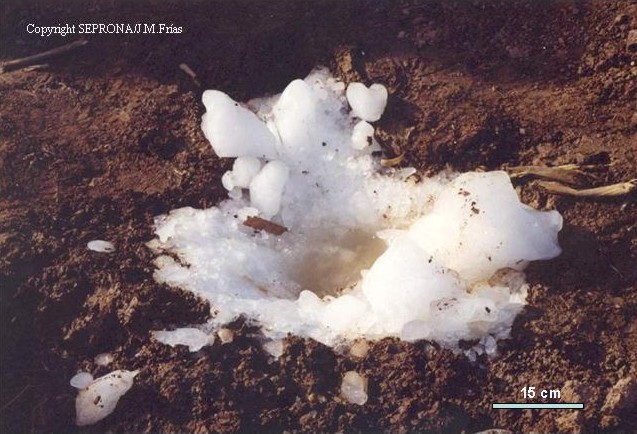
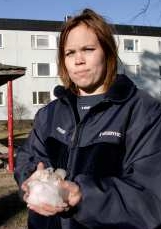
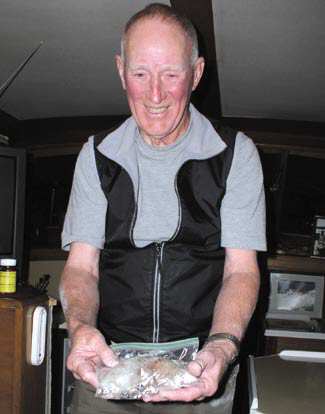
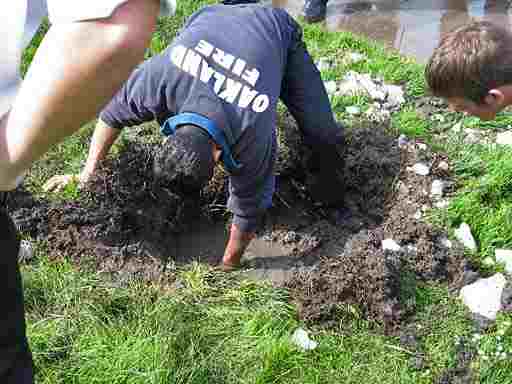
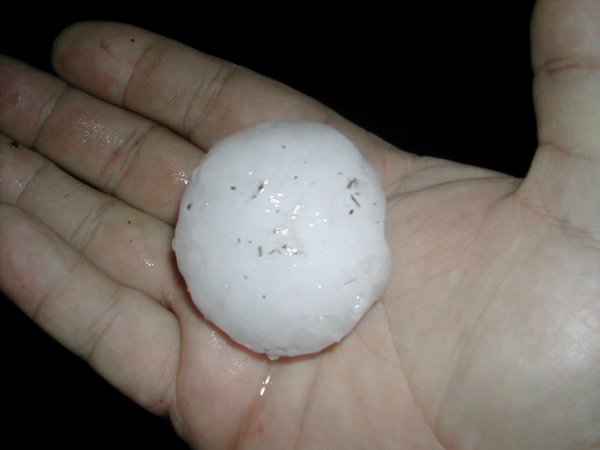
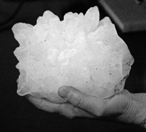
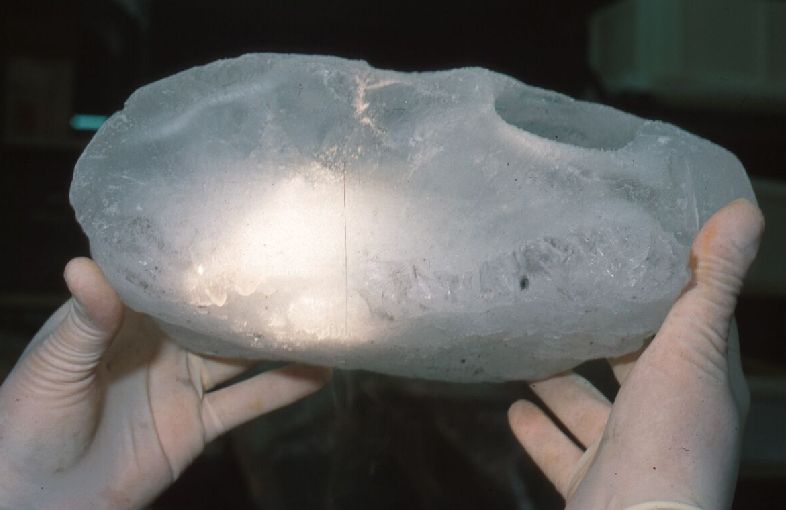
Some selected pictures from different countries
|
|
|
|
|
|
|
|
|
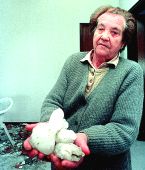


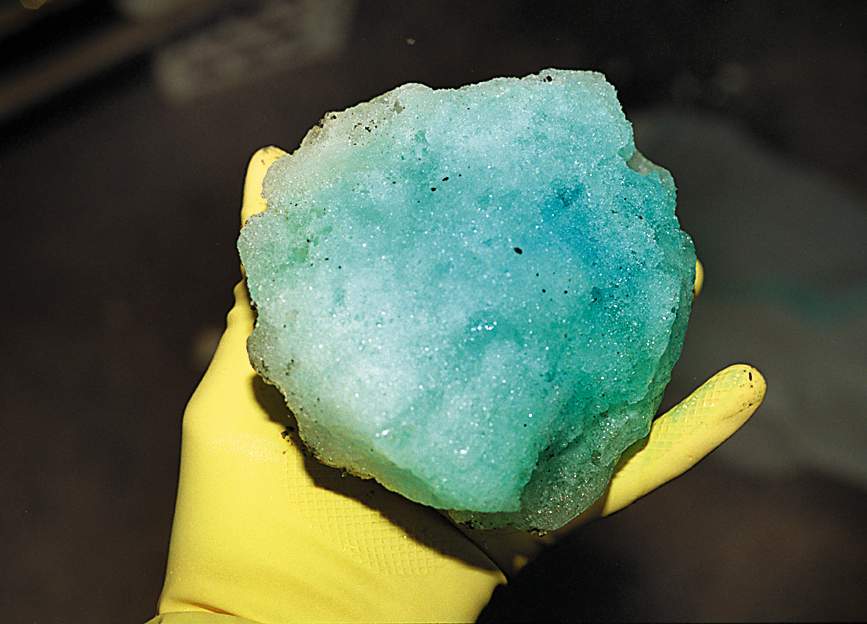
Different types of ice from the sky
|
Hail |
Hailstone |
|
Megacryometeor |
Blue ice |
|
Aircraft icing |
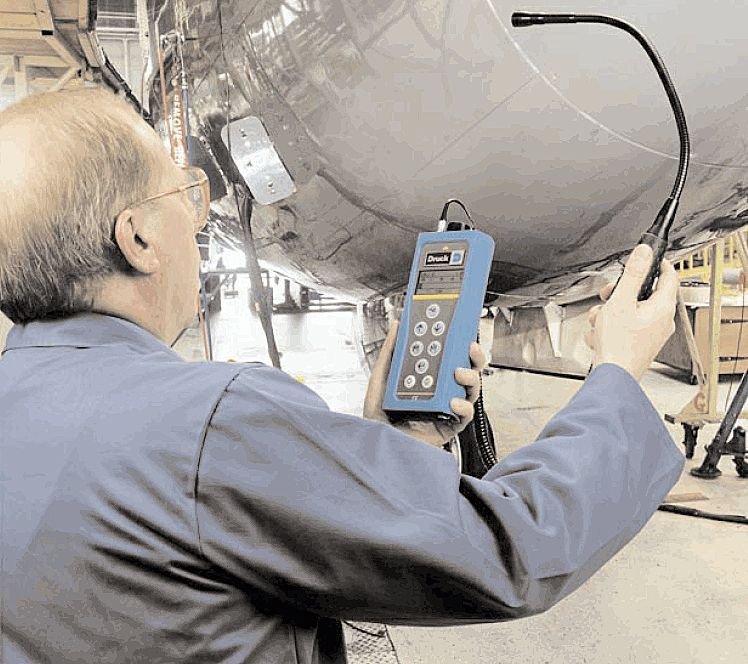
Water tank leak |
Countries - Ice fall Events (2010-2000)
This website is not updated since 2010!
|
2010 |
2009 |
2008 |
|
Bosnia-Herzegovina, Pakistan, Spain (2), USA (2), UK (3), Germany, China |
Canada, UK, USA (3), Chile, Brazil |
USA (4), UK (1) |
|
2007 |
2006 |
2005 |
|
USA (9), The Netherlands (2), Spain (1), UK (1), Argentina (1) |
India,USA (7), UK, South Africa |
Japan (2), Netherlands, UK (2), USA (6), Spain (3) |
|
2004 |
2003 |
2002 |
|
Netherlands, UK (2), Sweden, USA (4), New Zealand, Spain |
The Netherlands (2), Canada (1), USA (4), Italy (1) |
Portugal, UK, Mexico, Netherlands, Spain (3), USA |
|
2001 |
2000 |
Contact |
|
Spain, Australia |
Canada, Austria, Netherlands, UK, Italy, Spain, Colombia, Argentina |
|

Social/cultural impact of megacryometeors
Our study has had impact on different areas of knowledge. Some interesting examples are, among others:
- Its use in Lessons of Grammar for Writing .
- Its use in musical compositions, like the extraordinary "Falling from cloudless skies" by Derek Charke.
- Its use for the construction of a hypothesis mapping. Excellent flowchart by Tim van Gelder.
Megacryometeors
The term megacryometeor was coined in 2002 (Martinez-Frias & Travis 2002) to name large atmospheric ice conglomeration which, despite sharing many textural, hydrochemical and isotopic features detected in large hailstones, are formed under unusual atmospheric conditions which clearly differ from those of the cumulonimbus clouds scenario (i.e. clear-sky conditions).
Scientific articles
Rull, F. et al. (2010) Phil. Trans. R. Soc. A 368, 3145 - 3152.
Alamilla Orellana, F. et. al. (2008) Journal of Environmental Monitoring, 10, 570 - 574.
Martinez-Frias, J. and Delgado, A. (2006) AMBIO: Journal of the Human Environment 35-6: 314-316.
Martinez-Frias, J. et al. (2005)Journal of Atmospheric Chemistry 52:185-202.
Santoyo, E. et. al. (2002) Journal of Chromatography A , 956, 279-286.
Martinez-Frias, J. et. al. (2001) AMBIO: Journal of the Human Environment 30-7: 450-453.
Martinez-Frias, J. et. al. (2000)Geotimes, News Notes, American Geological Institute, June/2000: 6-7
Book chapters


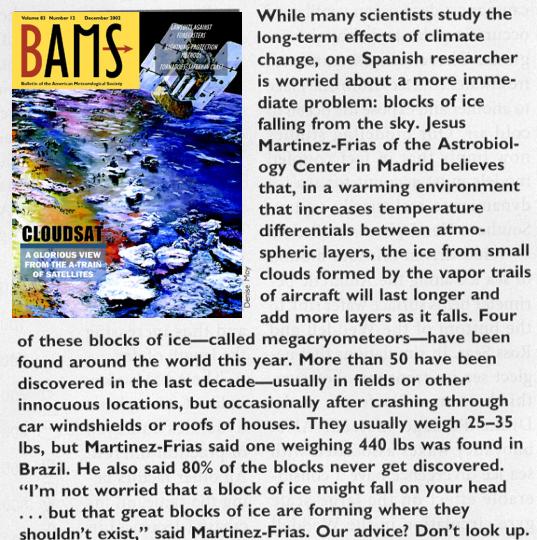
Bulletin of the American Meteorological Society, Vol. 83, 12, December 2002.
Bosch X. (2002) Great Balls of Ice, Science, News Focus, Meteorology, 297, 765.
National Geographic, Geographica, November 2000
Beech, M. (2006) The problem of ice meteorites. Meteorite Quarterly 12/4: 17-19.
New Scientist-Environment/by Ed Douglas.
Chemical Science (RSC) by Katherine Davies
Top 100 Stories of 2008 #73/Discover Magazine by Karen Wright
Discovery Channel (2010). Excellent segment on megacryometeors. Weird or What
Scientific studies on megacryometeors/other countries
- Special Thanks to Dr. William Kreiger and his research team (York Colleague), for sending us their results and some pictures reagarding the extraordinary York megacryometeor event (2008).